
REVIEW · GOBI DESERT TOURS
Semi-Gobi and Kharkhorum overnight private trip
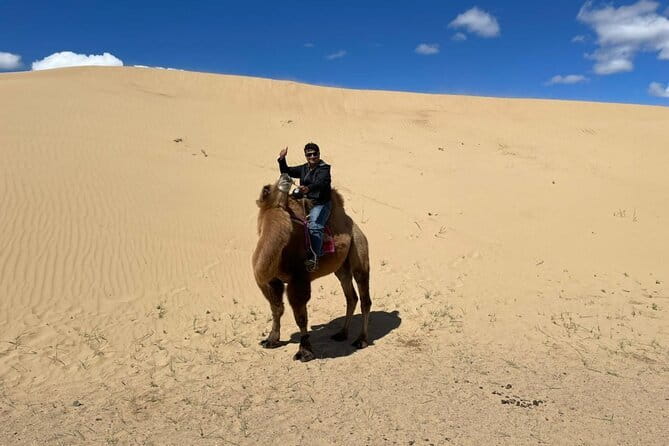
Mongolia gets wide open fast. This private overnight trip takes you from Ulaanbaatar’s city edge to the Elsen Tasarkhai sand dunes, a nomadic family’s ger, Khugnu Tarna Monastery, Kharkhorum, and Erdene Zuu. I like the personal guiding, especially guides such as Iggy, Namja, and Monkhmanlai, and I like that meals and a camel ride are built into the price.
The big catch is the road time. You should expect at least four hours in the car each day, with the full experience lasting about one day and six hours. I would choose this trip for its close contact with Mongolian family life and its private format, but not if you want a relaxed schedule with long stops at every sight.
In This Review
- Key points to know before booking
- What this overnight route really covers
- Leaving Ulaanbaatar through Emeelt
- A practical break at Urikhan
- Elsen Tasarkhai and the sand dunes
- Lunch with a nomadic Mongolian family
- Sleeping in a private ger
- Khugnu Tarna Monastery and the open country
- Kharkhorum Museum and Mongolia’s old capital
- Erdene Zuu, Mongolia’s oldest surviving Buddhist temple
- The guide and driver can shape the day
- Is $390 per person good value?
- Who should book this trip?
- Should you book the Semi-Gobi and Kharkhorum trip?
- FAQ
- How long does the trip last?
- Where does the tour start?
- Where does the tour end?
- Is this a private tour?
- Is camel riding included?
- What meals are included?
- What accommodation is provided?
- Can I cancel for a refund?
Key points to know before booking
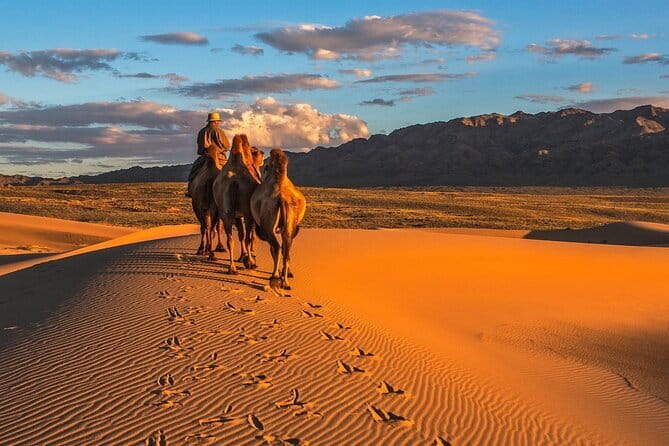
- The Semi-Gobi is the star: Elsen Tasarkhai gives you sand dunes, open grassland, mountains, and camel riding in one setting.
- You sleep beside a nomadic family: Accommodation is in a private ger, with an option for a private bathroom according to the available arrangements.
- The guides are a major strength: Iggy, Namja, and Monkhmanlai are praised for fluent English, cultural knowledge, flexibility, and thoughtful care.
- The trip reaches Kharkhorum: You visit the museum and Erdene Zuu, Mongolia’s oldest surviving Buddhist temple complex.
- The private format matters: Only your group takes part, so you can ask for photo stops, food requests, and some changes to the pace.
- Prepare for a long drive: The route packs a great deal into a short overnight outing, but you will spend many hours on the road.
What this overnight route really covers
This is a compact introduction to central Mongolia. In roughly 30 hours, you move through several distinct settings: the outskirts of Ulaanbaatar, industrial zones, open steppe, sand dunes, a Buddhist monastery, a historic capital, and a working nomadic home.
That variety is the main reason to consider it. You do not spend the whole trip in one resort-style camp or at a single monument. Instead, you get a quick look at how Mongolia changes outside the capital.
The pace is brisk. The route includes long drives, a rest stop, cultural visits, meals, an overnight stay, and a return to Ulaanbaatar. I would think of it as a strong sampler, not a slow country retreat.
Nomadic Hospitality Mongolia has operated since 2018. The company is run by two University of Nevada Las Vegas graduates who take a personal role in their tours. That background helps explain why the guide service receives so much praise from English-speaking visitors who want context about both Mongolia and Western customs.
More of the Gobi:
- From Ulaanbaatar: Semi Gobi and Ancient Kharkhorin Tour
★ 4.5 · 114 reviews - Ulaanbaatar: Semi-Gobi Desert Day Trip & Camel Ride
★ 4.0 · 92 reviews - 1 Day Semi-Gobi All-included tour
★ 4.0 · 69 reviews
Leaving Ulaanbaatar through Emeelt
The meeting point is Sukhbaatar Square, with an 8:00 a.m. start. Your first named stop is Emeelt, just outside the city proper. Emeelt is a large industrial area, so do not expect an early scenic viewpoint. It gives you a look at the working edge of Ulaanbaatar and the fast change from urban Mongolia to open country.
The stated drive time to Emeelt is about three and a half hours, which makes the timing worth checking carefully before you book. The route description appears to use Emeelt as an early major point on the journey, and the overall trip includes long stretches in the vehicle.
I would bring water, a small snack, and something to occupy you during the drive. Bottled water is included, but snacks, soda, and coffee are not. The air-conditioned vehicle is a useful comfort, especially when the weather changes or the road feels dusty.
A private car gives you more freedom than a large coach. You can ask the driver to stop for photos, and one guide, Iggy, is specifically praised for making extra photo stops when something caught the eye. That small benefit can make a big difference in Mongolia, where the view often changes faster than the schedule suggests.
A practical break at Urikhan
Urikhan is described as one of Mongolia’s first modern rest stops. You get about 30 minutes here, with access to restrooms, a coffee shop, restaurant, and store.
This is a simple stop, but it matters. Long road days are much easier when bathroom breaks are planned rather than left to chance. Namja is praised for looking after these practical details, including making sure the group had suitable breaks.
You should still treat the schedule as flexible. Road conditions and weather can affect timing, and this is not a city tour with precise five-minute departures. The private setup helps, but the route remains a long overland journey.
Elsen Tasarkhai and the sand dunes
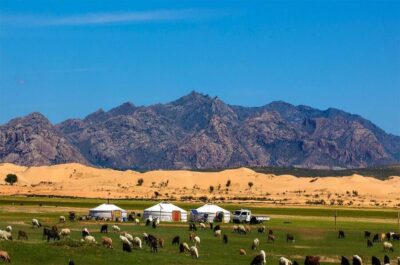
Elsen Tasarkhai is the main attraction. This area is often called the Semi-Gobi because it combines sandy ground and dunes with Mongolia’s open steppe and nearby mountains. You get the visual contrast that makes the route so appealing: pale sand, broad grassland, rugged hills, animals, and the occasional ger.
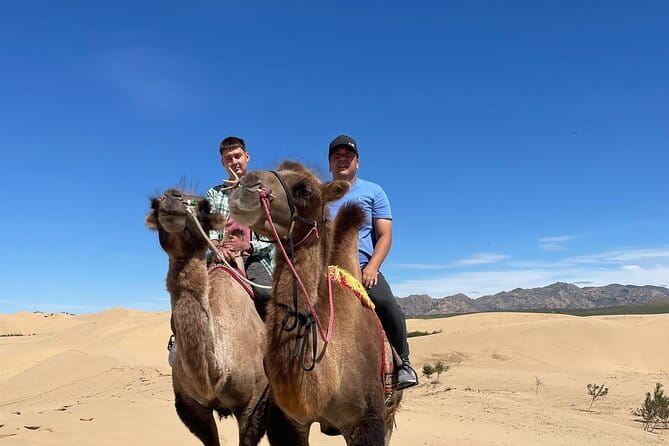
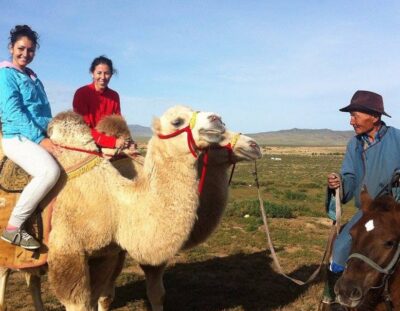
The stop is not only a photo opportunity. A camel ride is included, giving you a short, memorable way to experience the dunes. Several accounts praise the ride as scenic and enjoyable, though the length and exact riding arrangements are not specified.
I would wear shoes that can handle sand and bring sun protection. The weather can change quickly. One outing even brought unexpected overnight snow, which is a useful reminder that Mongolia’s seasons can be unpredictable.
The route description allows as much as 12 hours for the Elsen Tasarkhai section, including the nomadic meal and time in the dunes. That does not mean 12 hours on the camels. It reflects the large block of time devoted to the area, meals, rest, and local visits.
More of Kharkhorin and the old capital:
- Kharkhorum, Semi-Gobi 2 days 1 night private trip
★ 5.0 · 4 reviews - Mini Gobi and the ancient capital Kharkhorin – 4 days
★ 5.0 · 3 reviews - From UB: 2 Days Private Tour to Kharkhorin and Mini Semi Gobi
★ 5.0 · 2 reviews - 3 Day Tour to Kharkhorin and Mini Gobi with Camel and Horse Ride
★ 5.0 · 1 review
Lunch with a nomadic Mongolian family
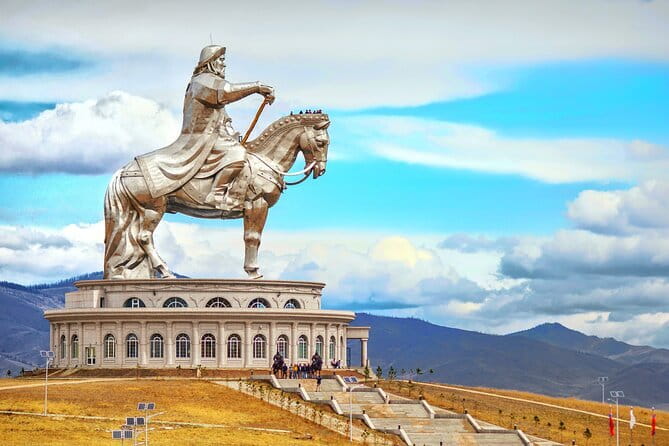
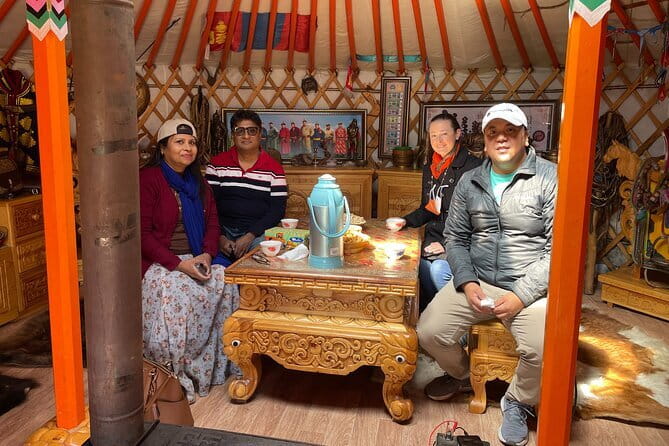
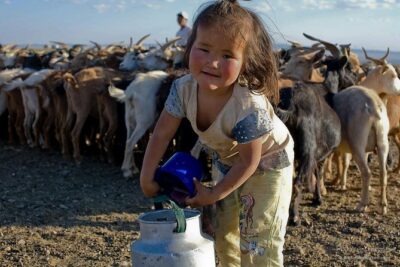
For me, the meal at the nomadic family’s home is one of the most valuable parts of the experience. You are not only looking at Mongolia from a car window. You are sitting down for traditional food in a working family setting.
Lunch is included, as are dinner and breakfast. The food is traditional Mongolian cooking, and you can request dietary preferences in advance. Snacks, coffee, and soft drinks are separate, so plan around that.
The host family and camel guide may not share a common language with you. One account describes communication through gestures, smiles, and a few laughs. That is part of the experience, but it is also worth knowing beforehand. Your main English communication will be with your certified guide.
The company’s stated aim is to make visitors feel like they are visiting long-known friends. That can sound like marketing language, but the guide reports support the idea in practical terms. Iggy is praised for being kind, flexible, eager to help, and fluent in English. Monkhmanlai and the drivers also receive strong praise for being interactive and informative.
You should approach the family visit with respect. Ask before photographing people, animals, or household areas. The point is not to treat the ger as a museum display. It is a chance to share food and learn how daily life works outside Ulaanbaatar.
Sleeping in a private ger
The overnight stay is in a private ger next to the nomadic family. A ger is Mongolia’s traditional round felt-and-wood dwelling, designed for a mobile way of life. The arrangement gives you a more personal night than a standard hotel in Kharkhorum.
Two accommodation options are available, and one arrangement includes a private bathroom. If that feature matters to you, confirm the exact option and any extra cost when booking. One couple found the private car and private-bathroom ger worth paying more for, which is helpful guidance if comfort is a priority.
The ger stay is also the part most likely to test your flexibility. Facilities are not described in detail, so I would not assume hotel-style service. Think of the overnight as a cultural stay with useful comforts, not a luxury lodge.
Dinner and breakfast are included. Since the tour is private, you can also raise food needs before departure. That is especially important if you have allergies, religious restrictions, or a strong dietary preference.
Khugnu Tarna Monastery and the open country
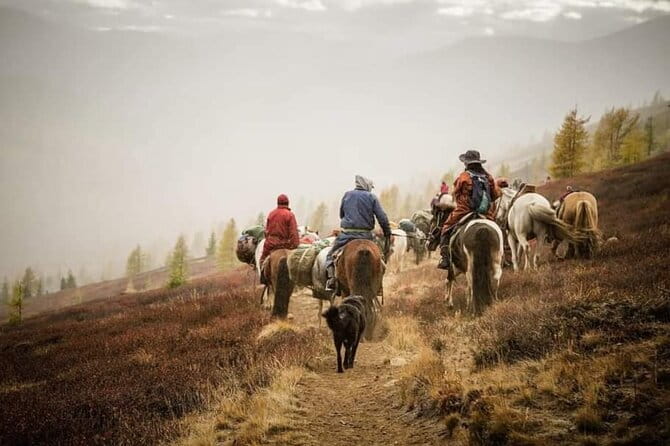
The route includes Khugnu Tarna Monastery, located in a national park. You can explore the area, visit the Buddhist monastery, and spend quiet time in prayer or meditation if you wish.
This stop adds a spiritual side to the trip. The dunes provide movement and color, while the monastery offers a quieter look at Mongolian Buddhist practice. You do not need to be religious to appreciate the setting, but you should dress and behave respectfully around the temple buildings.
The stop is listed as about two hours. That gives you enough time to walk around and take in the area without turning the visit into a rushed photograph stop.
The route’s open country is just as important as its named sights. You may see herds and animals during the drive, and the changing mix of mountains, grassland, and desert is one of the trip’s main rewards. Keep your camera ready, but also expect stretches where there is no formal attraction at all. In Mongolia, that empty space is part of the point.
Kharkhorum Museum and Mongolia’s old capital
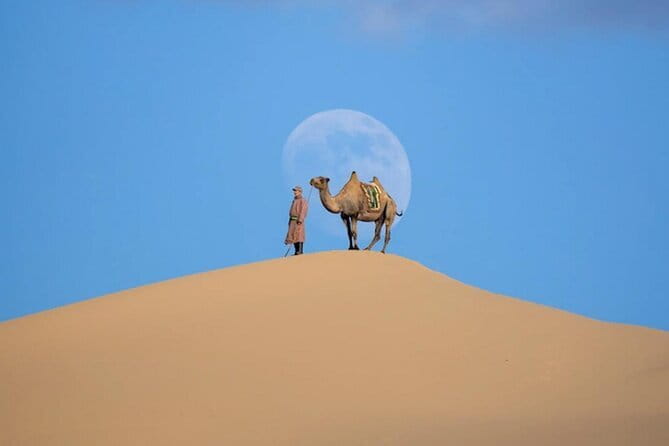
Kharkhorum, also written Kharkhorin or Kharkhorum, is the historic capital associated with the Mongol Empire. Today it is a town of about 20,000 residents and a lively regional center.
The first stop is the Kharkhorum Museum. It is small but informative, making it a good place to get basic context before you visit the nearby temple complex. I would pay attention here, since the museum helps connect the ruins, the religious sites, and the wider story of the old capital.
The listed visit is about two hours. That time may include the museum and the surrounding town area, so ask your guide how the schedule is being divided on your departure date.
This is where the trip shifts from natural scenery to history. If you want a detailed archaeological tour, one overnight outing cannot provide everything. If you want a clear introduction to the old capital while also seeing the countryside, the stop earns its place.
Erdene Zuu, Mongolia’s oldest surviving Buddhist temple
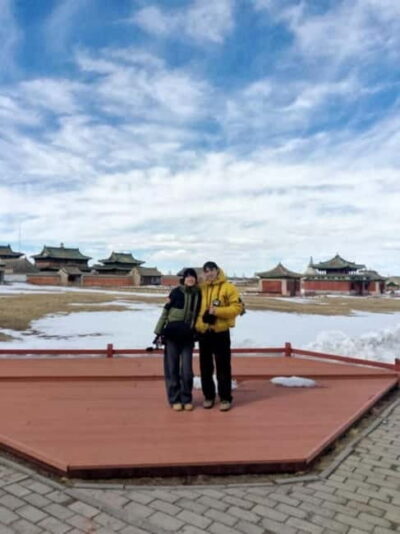
Erdene Zuu Monastery is the historic high point of the cultural portion. It is described as the oldest surviving Buddhist temple in Mongolia, and the complex was built using bricks and stones from the ruins of Kharkhorum.
The main temple complex now functions as a museum. That gives you a chance to see religious architecture and learn about the site’s past without treating it as an active temple alone.
The listed duration is only two minutes, which is clearly too brief to describe a meaningful visit to the complex. I would treat that figure as a scheduling error or a very short transfer notation and confirm the actual time available before booking. This is an important practical point, especially if Erdene Zuu is one of your main reasons for taking the trip.
Your guide can add value here by explaining the connection between the old capital and the monastery. Iggy is praised for his grasp of Mongolian history and for explaining cultural differences in clear English. That sort of conversation can turn a quick monument visit into something you remember.
The guide and driver can shape the day
The strongest part of this experience is the human service. Iggy is repeatedly praised for his English, enthusiasm, historical background, and ability to keep conversation going during the long drives. Namja receives praise for careful organization and attention to bathroom breaks. Monkhmanlai and other drivers are described as informative, interactive, and helpful.
That matters because the road time is substantial. A quiet driver and a basic script would make this trip feel much longer. A good guide can explain what you are seeing, answer questions, adjust photo stops, and help you understand the difference between city life and nomadic life.
The trip is private, so only your group participates. That suits couples, families, solo visitors, and small groups who want to ask questions without holding up a bus. It also gives you a better chance of requesting food changes or modest route adjustments.
Still, a private tour does not remove Mongolia’s distances. You may get extra stops, but you will not turn an overland route into a short transfer.
Is $390 per person good value?
At $390 per person, this is not a budget day trip. The price includes a certified guide, private air-conditioned vehicle, camel riding, bottled water, lunch, dinner, and breakfast. It also covers the overnight ger stay and admission to the included attractions.
The value is strongest for a small group that wants several services handled together. You are paying for transport across a large area, an English-speaking guide, private touring, meals, a cultural visit, and an overnight stay. Organizing all of that separately could be difficult, particularly if you are visiting Mongolia for only a short time.
The price is less appealing if you mainly want the dunes and do not care about the nomadic meal, monastery, or Kharkhorum. In that case, the long driving day may feel like too much for the main attraction.
Group discounts are offered, so larger private groups should ask about the final per-person rate. You can also request food preferences, which adds useful flexibility.
Who should book this trip?
I would recommend it to you if you want:
- A first taste of Mongolia beyond Ulaanbaatar
- A private guide and vehicle
- A camel ride without arranging a separate excursion
- Time with a nomadic family
- A short introduction to Kharkhorum and Erdene Zuu
- A trip that combines desert, grassland, mountains, animals, and Buddhist culture
I would hesitate if you dislike long drives, need a slow schedule, or expect polished hotel facilities. The overnight ger is part of the appeal, but the available details do not promise resort-level comfort.
Most people can participate, service animals are allowed, and the meeting point is near public transportation. The tour requires good weather. You can cancel up to 24 hours before the start for a full refund, while poor weather may lead to a new date or full refund.
Should you book the Semi-Gobi and Kharkhorum trip?
Book it if you want a well-supported first step into rural Mongolia and you accept the long road time. The best reasons are the private format, the nomadic family meal, the camel ride, and guides such as Iggy, Namja, and Monkhmanlai, who add warmth and useful local context.
Skip it if your priority is a deep visit to Kharkhorum or a restful stay. The schedule covers a lot, but it moves quickly. For the right person, that is the charm: one overnight gives you a broad, memorable taste of Mongolia without leaving the planning to chance.
FAQ
How long does the trip last?
The experience lasts approximately one day and six hours and includes an overnight stay.
Where does the tour start?
It starts at Sukhbaatar Square in Ulaanbaatar at 8:00 a.m.
Where does the tour end?
The trip ends back at the meeting point in Ulaanbaatar.
Is this a private tour?
Yes. Only your group participates.
Is camel riding included?
Yes. A camel ride in the Semi-Gobi sand dunes is included.
What meals are included?
Lunch at a nomadic Mongolian family’s home, dinner, and breakfast are included. Snacks, soda, and coffee are not included.
What accommodation is provided?
You stay in a private ger next to a nomadic family. Two accommodation options are available, including an option with a private bathroom.
Can I cancel for a refund?
Yes. You can cancel at least 24 hours before the start time for a full refund. Poor weather may result in a different date or a full refund.
Just added in Ulaanbaatar
- 7 Day White stupa Gobi Orkhon valley Central Mongolia★ 5.0 · 1 review
- Ulaanbaatar: Mongolian Bökh Wrestling Tournament Experience★ 5.0 · 1 review
- Ulaanbaatar Signature Tour – Mongolia’s Capital in One Day★ 4.3 · 3 reviews
- Ulaanbaatar: Chinggis Khaan Museum Highlights Private Tour★ 5.0 · 2 reviews
- Ulaanbaatar: Chinggis Khaan Equestrian Statue – Terelj NP★ 5.0 · 1 review
- Ulaanbaatar: 4-Day Central Mongolia Winter Tour★ 5.0 · 3 reviews
- UB Walk: Discover a Side of Ulaanbaatar Most Travelers Miss★ 5.0 · 2 reviews
- Private Transfer between New Ulaanbaatar International Airport and Ulaanbaatar★ 5.0 · 4 reviews
Gobi Desert Tours, compared.
Travel to Gobi by train Visit World energy Center
Read our review →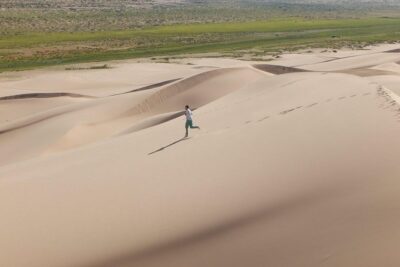
1 Day Semi-Gobi Tour with Lunch And Enjoying Camel or Horseback
Read our review →
Browse the lists this tour appears in