
REVIEW · GOBI DESERT TOURS
Mini Gobi and the ancient capital Kharkhorin – 4 days
Sand, yaks, and an ancient capital await. This four-day Mongolia trip links the Mini Gobi, nomad families, Kharkhorin, Erdene Zuu Monastery, and the UNESCO-listed Orkhon Valley in one compact route. You can sleep in an extra ger, taste local dairy products, see working animals, hike among dunes, and ride a Bactrian camel.
I like the close contact with family life and the mix of places: this is not only a sightseeing drive. I also like that meals, entrance fees, and three nights of breakfast and dinner are included. The main drawback is the amount of time on the road, with long driving days and limited time at some stops.
In This Review
- Key points to know before booking
- Why this four-day route works
- Day one: sand dunes at Elsen Tasarkhai
- Day two: Erdene Zuu and the ruins of Kharkhorin
- Orkhon Valley: open country with imperial connections
- Day three: Khogno Khan and a second nomad visit
- Day four: Bactrian camels before Ulaanbaatar
- What the $596 price covers
- The driving, group size, and comfort question
- Who should book this Mongolia tour?
- Should you book the Mini Gobi and Kharkhorin trip?
- FAQ
- How long is the Mini Gobi and Kharkhorin tour?
- What time does the tour start?
- How many people can join the tour?
- Are meals included?
- Is camel riding included?
- Can I cancel for a full refund?
Key points to know before booking
- A Mini Gobi in the middle of the steppe: Elsen Tasarkhai gives you sand dunes, mountains, and open country without traveling deep into the southern Gobi.
- A real ger stay with a nomad family: You can see yaks and other animals, learn about daily life, and taste dairy products.
- Kharkhorin connects Mongolia to the Silk Road: The former imperial capital was once a political, religious, and trading center.
- Erdene Zuu adds major cultural depth: The monastery and local museum give context to the ruins nearby.
- Camel riding is built into the route: Day four includes about an hour on a Bactrian camel near Khogno Khan Mountain.
- Small groups keep the trip personal: The maximum is 10 people, and one past booking became a private trip for two.
Why this four-day route works
Mongolia is enormous. A short trip from Ulaanbaatar can easily become a tiring procession of roads and photo stops. This route makes a sensible circle through central Mongolia, pairing soft sand dunes with grassland, mountains, river country, religious buildings, and the remains of a major medieval city.
I like the contrast. At Elsen Tasarkhai, you get a Gobi-style setting. At Orkhon Valley, the scenery opens into river country tied to the Mongol Empire. At Kharkhorin, you are looking at the remains of a place that once mattered far beyond Mongolia.
The route also gives you a small taste of nomadic life. Staying in an extra ger is more meaningful than simply stopping for a photograph. You can meet a family, see animals such as yaks, taste dairy products, and get a sense of how homes and hospitality work on the steppe.
Still, this is not a relaxed resort holiday. The stated schedule includes long drives, and some day-by-day time estimates are substantial. The first day is listed at about 19 hours, while day two combines roughly four hours at Erdene Zuu with ten hours in the Orkhon Valley. Treat those figures as an indication that road time is a serious part of the trip.
More of the Gobi:
- From Ulaanbaatar: Semi Gobi and Ancient Kharkhorin Tour
★ 4.5 · 114 reviews - Ulaanbaatar: Semi-Gobi Desert Day Trip & Camel Ride
★ 4.0 · 92 reviews - 1 Day Semi-Gobi All-included tour
★ 4.0 · 69 reviews
Day one: sand dunes at Elsen Tasarkhai
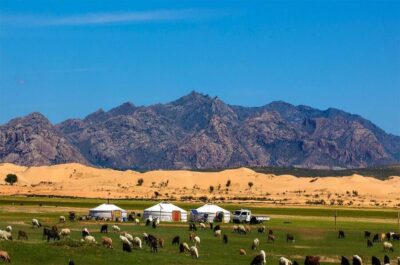
The journey begins at 9:00 a.m. with a drive toward Elsen Tasarkhai, often called the Mini Gobi. The appeal is its compact variety. You can find sand dunes, mountain forms, and open steppe close together, making this a useful introduction to Mongolia’s changing scenery.
You will have time to walk around the dunes and take photographs. After visiting a nomad family, you can taste dairy products and see something of the household’s way of life before returning to the sand for a hike after lunch.
I like the order of this day. You first see the place, then meet people who live in the region, then have time to move through the dunes on foot. That creates a better connection than a quick roadside stop.
The practical caution is footwear and energy. Sand walking is harder than it looks, especially after a long drive. You should also expect a simple, hands-on visit rather than a staged cultural show. The details provided do not promise a particular menu or a fixed list of animals, but yaks and other livestock are part of the planned encounter.
The first night is part of the ger-based side of the trip. The description says you can stay in an extra ger with a nomad family. That is one of the strongest reasons to choose this route, although you should be comfortable with a basic rural setting and not expect hotel-style facilities.
Day two: Erdene Zuu and the ruins of Kharkhorin
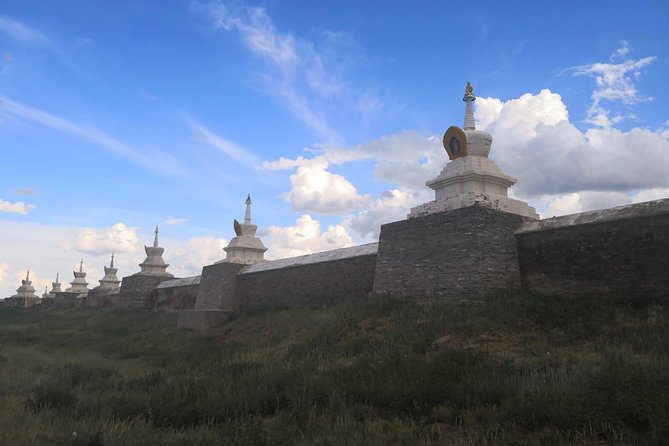
Day two takes you to Kharkhorin, the ancient capital of the Mongolian Empire in the 13th century. The city once served as a political, economic, administrative, and religious center. It also held an important place in world trade and the Silk Road.
That context matters. Kharkhorin is not simply a pile of old stones in an empty field. Its importance came from its position at the meeting point of imperial power, religion, commerce, and movement across Asia. The remains are a reminder that Mongolia was once at the center of a vast political world.
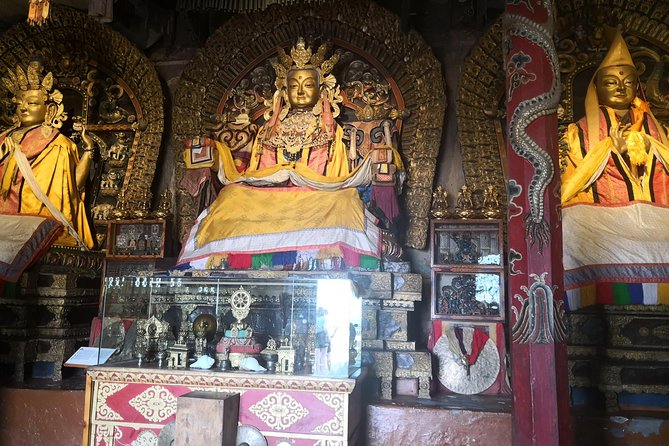
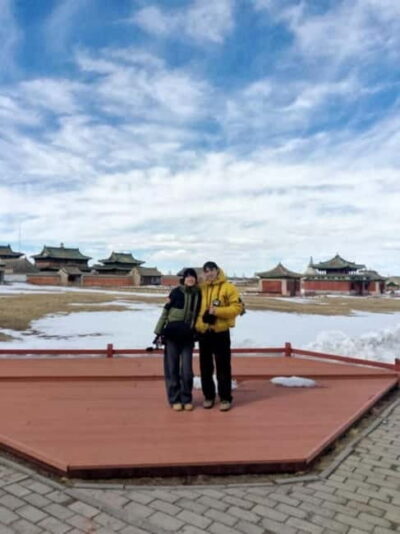
The stop at Erdene Zuu Monastery gives the ruins a second layer. You will visit the monastery, whose name means Hundred Treasures, along with a local museum. The entrance fee is included, so you do not need to budget separately for those admissions.
I like this pairing because the monastery and museum can help explain what you are seeing around Kharkhorin. Without that context, a historical site can feel remote. With it, the old capital becomes easier to picture as a living center rather than only an archaeological location.
The supplied schedule allows about four hours for Erdene Zuu and Kharkhorin. That should give you a useful visit, but the total day remains demanding because the route continues toward Orkhon Valley after lunch. If you prefer slow museum visits and long periods at one site, this may feel compressed.
Orkhon Valley: open country with imperial connections
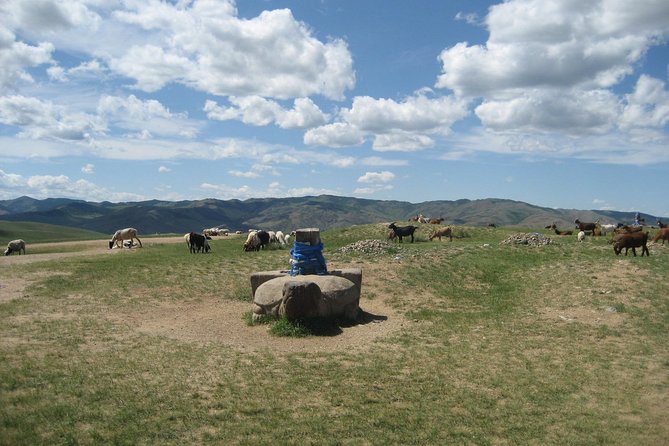
After lunch, you continue to the Orkhon River valley. The valley is listed as a UNESCO World Heritage Site for its historical connection to the Great Mongolian Empire. Its value is both cultural and visual, with broad open scenery shaped by the river and the surrounding country.
I like that the tour does not treat Mongolia’s history as something confined to a museum. Here, the setting itself helps explain how movement, settlement, animals, and political power could operate across the steppe. The connection between land and history is one of the most rewarding parts of the route.
The Orkhon portion is listed at about 10 hours, which likely reflects a long transfer and time spent seeing the valley rather than ten hours at one single viewpoint. You should be prepared for a full day in the vehicle, even though the open views can make the drive feel worthwhile.
Because the route covers large distances, comfort matters. One past booking described the driver as caring, flexible, and helpful, with good English and a comfortable car. Another praised the coordinator and said the driver paid close attention to personal needs. Those details are useful, but they should not lead you to expect the same named driver or vehicle on every departure.
More of Kharkhorin and the old capital:
- Semi-Gobi and Kharkhorum overnight private trip
★ 5.0 · 14 reviews - Kharkhorum, Semi-Gobi 2 days 1 night private trip
★ 5.0 · 4 reviews - From UB: 2 Days Private Tour to Kharkhorin and Mini Semi Gobi
★ 5.0 · 2 reviews - 3 Day Tour to Kharkhorin and Mini Gobi with Camel and Horse Ride
★ 5.0 · 1 review
Day three: Khogno Khan and a second nomad visit
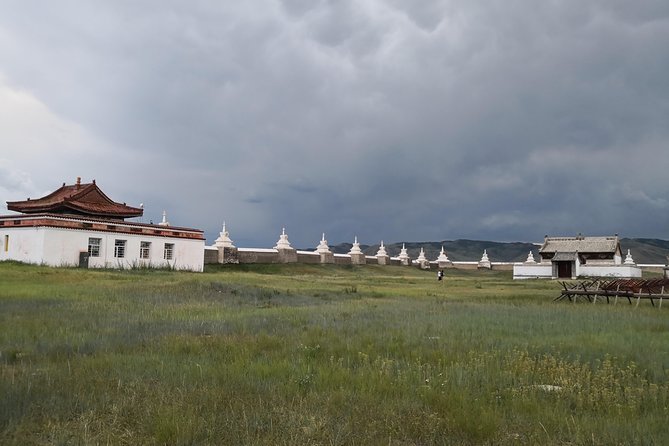
The third day brings you to Khogno Khan Uul National Park, also written as Khugnu Tarna in the route details. This area is valued for its mix of mountain, forest, and Gobi-type scenery. It is another place where Mongolia refuses to fit into one postcard.
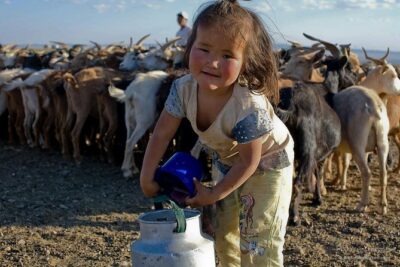
Near Khogno Khan Mountain, you will visit a nomad family and learn more about local life. Having a second family visit can be worthwhile because nomadic life is not a single, fixed display. Families, animals, surroundings, and daily routines differ, and this stop gives you another chance to ask questions and observe.
The day is listed at about 10 hours. Again, driving is part of the deal. The reward is variety, but the tradeoff is that you may spend more time reaching the scenery than walking through it.
I would use this day to slow down mentally. Look at how the mountain meets the open country. Notice the changes from the Mini Gobi. Pay attention to the animals and the practical details of the ger visit. The value is in the texture of the day, not in collecting a long list of formal attractions.
The tour includes lunch, as well as dinner and breakfast during the overnight portion of the route. It does not include soft drinks, alcohol, insurance, or personal items. Bring money for those extras and arrange your own insurance before leaving home.
Day four: Bactrian camels before Ulaanbaatar
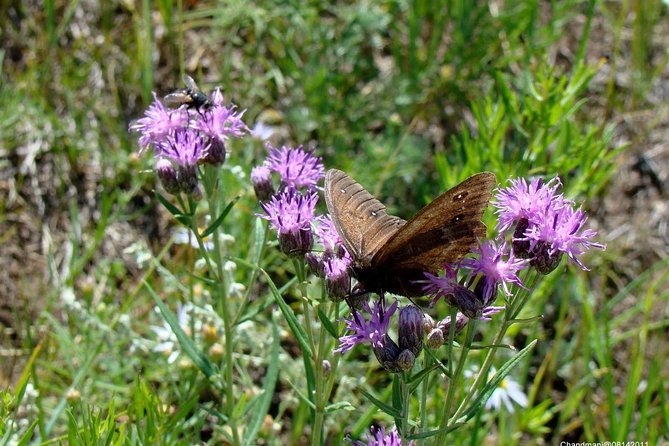
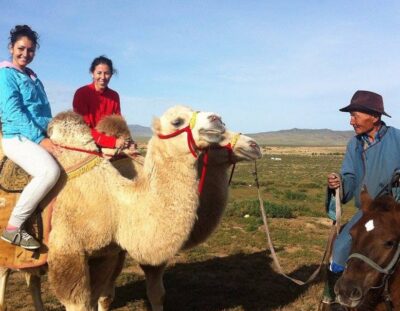
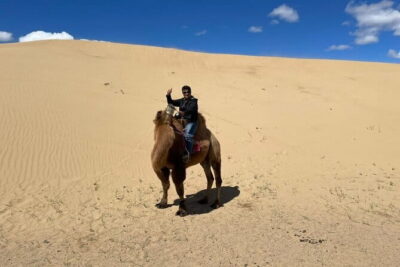
The final morning begins with breakfast, followed by about an hour of Bactrian camel riding. This takes place near Khogno Khan Mountain, with a visit to a nearby lake included before lunch.
The camel ride is a clear highlight for many people. Bactrian camels, with their two humps, suit this dry central Mongolian setting and give the final day a strong sense of place. It is also a more memorable activity than another brief photo stop.
The route then turns back toward Ulaanbaatar after lunch. The return drive is listed at about three hours, although actual road conditions and the day’s schedule can affect timing. Pickup is offered, and the stated start time is 9:00 a.m.
Because the camel ride is included, you do not need to arrange a separate activity. The experience is described as lasting one hour, so think of it as a short introduction rather than a full-day riding expedition.
What the $596 price covers
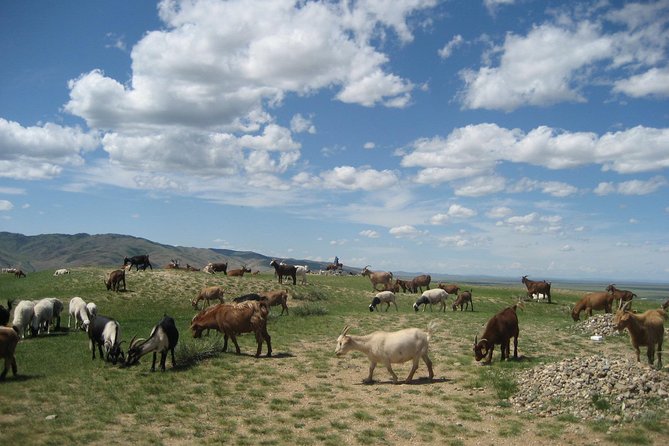
At $596 per person, the tour is not a bare-bones transfer. The price includes all fees and taxes, four lunches, three breakfasts, and three dinners. It also includes the Erdene Zuu admission and the camel-riding activity listed on day four.
That package matters in Mongolia, where long-distance routes can make food, transport, and overnight arrangements difficult to organize independently. The tour also bundles several major stops into four days, including the Mini Gobi, Kharkhorin, Orkhon Valley, and Khogno Khan National Park.
You are paying for coordination as much as admission tickets. A driver, route planning, meals, family visits, and ger accommodation are part of the overall value. If you tried to arrange each part separately, the planning burden would be much higher.
The price does not cover insurance, soft drinks, alcohol, or personal purchases. I would also keep some flexibility in your budget for items connected with the nomad visits, although the supplied details do not specify any required extra payment.
Group discounts are offered, and the maximum group size is 10. That is small enough to make questions and personal attention easier. One booking for two people became a private trip, which shows that the final group may sometimes be smaller than the maximum, though you should not assume a private departure unless it is confirmed.
The driving, group size, and comfort question
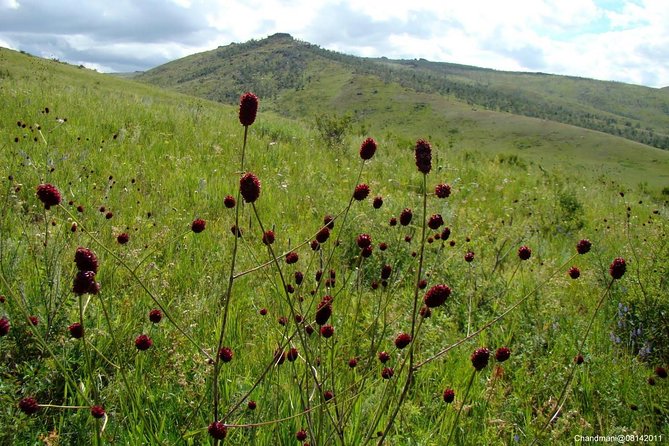
The route is best understood as a road trip with cultural and outdoor stops. The distances across central Mongolia are part of the experience, but they can also be tiring. If you want a trip with little sitting, four days is too short for this amount of ground.
The small group limit helps. A group of up to 10 can usually move more easily than a large coach, and a smaller vehicle should make the long drives less wearing than a full-size bus. Still, the exact vehicle is not guaranteed in the details provided.
The strongest practical praise concerns the human side of the operation. The coordinator was described as excellent, and the driver was praised for being caring, flexible, helpful, and comfortable to travel with. Good English was also noted. Those qualities matter on a route where plans may need to adjust and where clear communication is important.
Most people can participate, according to the tour information. No special accessibility details are supplied, so you should ask the provider directly if you have mobility, medical, or sleeping concerns.
Who should book this Mongolia tour?
I would recommend this trip to you if you want a first taste of central Mongolia and prefer a prepared route over independent transport planning. It suits people who want history, family contact, animals, light hiking, sand dunes, and a short camel ride in one package.
It is also a strong choice if your time in Mongolia is limited. You will not see every major region, but you will get a useful cross-section of the country near Ulaanbaatar.
I would hesitate if you need polished hotels, short transfer times, or a slow schedule. The ger stay is part of the charm, but rural accommodation may feel basic. The road time is unavoidable, and the route packs several major places into four days.
The tour has a 5.0 rating from three published bookings, including praise for the coordinator, driver, flexibility, English communication, and vehicle comfort. That is encouraging, but the sample is small. Use the praise as a useful sign, not as a guarantee that every departure will be identical.
You can cancel for a full refund up to 24 hours before the start time. Poor weather or failure to reach the minimum number of participants can lead to a different date or a full refund.
Should you book the Mini Gobi and Kharkhorin trip?
Book it if you want variety over leisure. In four days, you will see dunes, mountains, river country, a monastery, an ancient capital, nomad homes, yaks, a lake, and Bactrian camels. That is a lot of Mongolia for one route.
Skip it if long drives drain the pleasure from a trip or if you want to spend several days in one place. For everyone else, the $596 price is reasonable because meals, admissions, transport coordination, family visits, and the ger-based stay are brought together in one small-group journey.
FAQ
How long is the Mini Gobi and Kharkhorin tour?
The tour lasts approximately four days.
What time does the tour start?
The stated start time is 9:00 a.m.
How many people can join the tour?
The maximum group size is 10 travelers.
Are meals included?
Yes. The tour includes four lunches, three breakfasts, and three dinners.
Is camel riding included?
Yes. Day four includes about one hour of Bactrian camel riding, and the admission fee is included.
Can I cancel for a full refund?
Yes. You can cancel at least 24 hours before the experience starts for a full refund. Changes or cancellations made less than 24 hours before the start time are not accepted for a refund.
Just added in Ulaanbaatar
- 7 Day White stupa Gobi Orkhon valley Central Mongolia★ 5.0 · 1 review
- Ulaanbaatar: Mongolian Bökh Wrestling Tournament Experience★ 5.0 · 1 review
- Ulaanbaatar Signature Tour – Mongolia’s Capital in One Day★ 4.3 · 3 reviews
- Ulaanbaatar: Chinggis Khaan Museum Highlights Private Tour★ 5.0 · 2 reviews
- Ulaanbaatar: Chinggis Khaan Equestrian Statue – Terelj NP★ 5.0 · 1 review
- Ulaanbaatar: 4-Day Central Mongolia Winter Tour★ 5.0 · 3 reviews
- UB Walk: Discover a Side of Ulaanbaatar Most Travelers Miss★ 5.0 · 2 reviews
- Private Transfer between New Ulaanbaatar International Airport and Ulaanbaatar★ 5.0 · 4 reviews
Gobi Desert Tours, compared.
Semi-Gobi and Kharkhorum overnight private trip
Read our review →
Travel to Gobi by train Visit World energy Center
Read our review →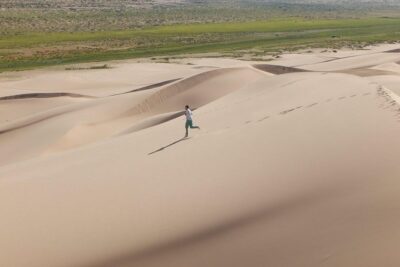
1 Day Semi-Gobi Tour with Lunch And Enjoying Camel or Horseback
Read our review →Browse the lists this tour appears in